Friday, 5 February 2016

Casino Royale (TV, William H. Brown, 1954)


 Long before (well, eight years before, at least) Sean Connery essayed the role of superspy James Bond in Terence Young's 1962 Dr. No, and two years prior to Bob Holness of TV's Blockbusters playing Bond in a version of Moonraker for South African radio (and how i hope that the story of the genial Mr Holness greeting the news of Connery's casting with "Who's this cunt that's got my job?" is not apocryphal, because it never fails to amuse), there was only one actor to play Agent 007.  His name was Nelson.  Barry Nelson.


Starting out his career as an MGM contract player, Nelson had made his screen debut in the fourth in the series of William Powell and Myrna Loy's Nick and Nora Charles series Shadow of the Thin Man (W. S. Van Dyke, 1941) before appearing in a string of movies as diverse as the noir mystery Eyes in the Night (Fred Zinnemann, 1942) and Victor Fleming's wonderful romantic fantasy A Guy Named Joe (1943) - the basis for Steven Spielberg's 1989 remake Always - and then returning to the US after his wartime military career to feature in prestigious Broadway productions (Moss Hart's Light Up The Sky and F. Hugh Herbert's The Moon is Blue) before making many appearances in television dramas.


 Cast as James Bond, 007 - referred to throughout the American adaptation as 'Jimmy' - Nelson was unfamiliar with the character or the material with which he was working ("I was scratching my head wondering how to play it.  I hadn't read the book... it wasn't well known", he admitted in an interview), the source novel - the first of Ian Fleming's soon to be world famous series - having only been published two years earlier.  Made and aired as part of CBS' Climax! mystery theatre anthology series (which also went on to feature an adaptation of Robert Louis Stevenson's Dr Jekyll and Mr Hyde - starring Michael Rennie of Robert Wise's seminal 1951 SF classic The Day the Earth Stood Still) and broadcast live as was the televisual practice of the time, the episode is introduced by host William Lundigan who explains to the audience about the game of baccarat (which i honestly could have done with Martin Campbell 2006 film version doing with the rules of Texas Hold 'Em poker).  Nelson's flat-topped Combined Intelligence Agent 'Card Sense' Jimmy Bond is paired with Clarence Leiter - changed from the Felix Leiter of the novel and now a British agent, possibly as part of some kind of foreign exchange programme with Bond - played by Australian thespian Michael Pate (best known to me through my penchant for the slightly less dignified areas of cinema as the undead gunslinger Drake Robey aka Don  Drago Robles in the extraordinary vampire Western Curse of the Undead [Edward Dein, 1959], and his turns as the President in two Philippe Mora directed spectaculars: The Return of Captain Invincible [1983] and Howling III: The Marsupials [1987].  I do watch more edifying films.  Honest.  Sometimes.) and French agent of the Deuxieme Bureau Valerie Mathis - a composite of Fleming's Vesper Lynd and Rene Mathis characters - played by the gorgeous Mexican actress (and wife of Hollywood star Tyrone Power) Linda Christian.


Bond's mission is to take on and 'clean out' the villainous Le Chiffre, played by the great Peter Lorre (of Fritz Lang's superlative classic M [1931], Hitchcock's The Man Who Knew Too Much [1934], John Huston's The Maltese Falcon [1941] and many, many more - including favourites of mine Stranger on the Third Floor [Boris Ingster, 1940] and The Boogie Man Will Get You [Lew Landers, 1942]).  Lorre is perfectly cast as the 'toadlike' Le Chiffre, wheedling and plotting as he tries to win back the funds of his Soviet paymasters that he has blown (he's blown the funds, not the Russians) and dreading the dreaded revenge wreaked by SMERSH should he fail in his gambling endeavour.


The story moves at a good pace (perhaps due to incorporating the famed 'Fleming sweep' of its source material) across it's just under an hour runtime, with no perceptible gaffes or errors - always a danger in live broadcast material, as evidenced by the earlier Climax! production of Raymond Chandler's 'The Long Goobye', in which the actor playing the corpse assumed he was out shot, got up and ambled away.  It also stays pretty close (merged characters and swapped nationalities aside) to the novel, including the scene in which Le Chiffre's henchman holds Bond to ransom during the duel of cards by holding a trick walking stick that is actually a gun to the base of his spine in order to persuade him to leave the game and hand over his winnings - a sequence changed in the 2006 version to Bond being poisoned with a Digitalis-flavoured Martini and having to race to his car to self-administer defribrillation and medication.  Perhaps EoN Productions simply didn't think escaping a life or death situation by gripping the edge of a table and throwing oneself backwards onto the floor fit the image they wanted for the 21st century Bond they wanted to project. Still, it's nice to see it here.


One sequence that has altered however, inevitably due to the sensibilities of 1950s US television, is the torture sequence after Bond has been lured into the clutches of the vile Le Chiffre by the kidnap of Valerie / Vesper.  There was simply no way that the original scenario (a naked Bond tied to a wicker chair with the seat cut out and having his genitals battered by a carpet beater) was going to stand, yet the replacement in which a beaten Bond is tied and placed in a bathtub, his shoes removed and having his toes worked on with a pair of pliers is actually quite effective.  Due to the camera cutting away from what is precisely being done to the Bondian dactyls, and the agonised reactions of Nelson and Christian (Valerie being forced at gunpoint to watch her lover's grueling ordeal) it is left vague as to whether his toes are being broken or his toenails pulled out.  Either way, it led to me wincing almost as much as the canonical clacker-cracking.


 An enjoyable oddity of a production, obviously very different to the 'canonical' Bond series but still a fascinating curio, 'Casino Royale' features good performances from a great cast and a nicely taut and pacy script.  Rumours suggest that it had been mooted as a backdoor pilot to launch a 1950s US James Bond  TV series, and i do like the notion of a parallel universe wherein Barry Nelson was as well-known as James Bond as, say, Richard Greene is for Robin Hood.  He'll always be remembered by me, however, as 'officious little prick' Stuart Ullman, martinet manager of the dreaded Overlook Hotel in Stanley Kubrick's seminal The Shining (1980).  Shaken and stirred.


Tuesday, 2 February 2016

Captain America (Albert Pyun, 1990)


 With Marvel Studios' current domination of the cinematic box off ice like a veritable four-colour Kirby-dotted Titan, it's very easy to forget the long lean days of yore when to be a comic book fan who wanted to see one's mighty heroes transliterated from the pulpy page to the silver screen was to be given less choice than Sophie Zawitowski.  It must be near impossible today, when Disney chairman Bob Iger confidently states that Marvel film productions "will go on forever" as the production slate for the Marvel Cinematic Universe shifts from Phase Two to Phase Three (with a projected roster of eleven movies spanning from Captain America: Civil War [Joe Russo and Anthony Russo, 2016] to Inhumans [2019]), to conceive of a time when a superhero movie was a rare beast - when the David Hasselhoff-starring made for television Movie of the Week Nick Fury: Agent of S.H.I.E.L.D. (Rod Hardy, 1998) would be eagerly anticipated, when reruns of the classic Bill Bixby / Lou Ferrigno The Incredible Hulk (1978-1982) would be gleefully enjoyed with any thoughts about how unlike the source material it really was pushed to the back of the mind, or when perfunctory Dolph Lundgren actioner The Punisher (Mark Goldblatt, 1989) would transcend its slightly grubby B-list Death Wish status in the eyes of the viewer because it was Marvel character Frank castle there on the screen.  Slim pickin's indeed.  For the Marvel comics fan cum cineaste, it was like trying to convey to a young Doctor Who fan in the modern age what the 1990s were like.  "We didn't have all this stuff!".


And much in the same way that a Who fan can sometimes sound like he's perversely nostalgic for the days when there was less of what he likes around, in some ways I do look back fondly upon the days when a comic book adaptation was the rarity rather than the rule.  As good an actor and likeable a screen presence as Mark Ruffalo is, Bill Bixby remains the archetypal (David) Bruce Banner for me.  Neither Tobey Maguire nor Andrew Garfield have displaced Nicholas Hammond as Spider-Man in my mind's eye.  The fervour with which the TV showings or VHS releases of Marvel product in the 1980s and most of the 1990s was met meant that these portrayals were seared indelibly upon my impressionable young brain.  In the case of Star-Spangled Avenger Captain America, long before Chris Evans strode onto the screen as Steve Rogers there was another actor who had essayed the role.  Well, there were three previous actors, actually: Dick Purcell (star of Jean Yarbrough's 1941 King of the Zombies) had played Cap in a 1944 Republic Pictures movie serial that saw the character's alter ego changed to crime-fighting district attorney Grant Gardner, and Reb Brown had taken hold of the mighty vibranium shield for a pair of TV movies in 1979 that i won't cover in any detail here, as they're so genius / awful that i'm certain i'll get round to doing them in detail some time.  But the film i'm concerned with here is the 1990 Cannon Films production starring Matt Salinger, son of reclusive Holden Caulfield-spawner J. D. Salinger.


Coming hot on the heels of Pyun's superlative essaying of futuristic apocalyptic angst Cyborg (1989) - and you know what, i may not even actually be joking there - but before the dizzy heights of 1991's Dollman or 1996's Omega Doom (alright, yes, i'm just straying into ridiculous territory here) this feature eschews both the modernising take of the 1970s movies and the historical setting of the most recent iteration by going the whole entire hog and establishing the character's origin from the frail polio-stricken Steve Rogers into the titular Super Soldier during World War II, as well as his first skirmish with the villainous Red Skull (Scott Paulin, of Teen Wolf [1985] and other stuff, probably) before literally putting the character on ice until 'the present day'. 


The film features Ned Beatty, possibly best known to fans of the superhero movie as Otis 'Otisburg' from off of the Superman (1978), as childhood Cap'n 'Murica fan (his younger 1940s self being portrayed by Beatty's son Thomas) and confidante Sam Kolawetz, 'Dick Jones from RoboCop' Ronny Cox as President Tom Kimball, and in a weird piece of double casting that makes my fannish mind explode both Bill Mumy (from Lost in Space [1965-1968] and Babylon 5 [1994-1998]) and Darren McGavin (Carl Kolchak himself from Kolchak: The Night Stalker [1974-1975]) as the respective younger and older versions of the dodgy General Fleming.


The more recent films obviously have the talents of performers such as Hayley Atwell to call upon, but this modest take upon the material does quite well with the performance of Kim Gillingham as both Steve's 1940's love interest Bernie and her present day incarnation Sharon in a contrast of 'The Olden Days' with 'The Present Day' that Austin Powers: International Man of Mystery (Jay Roach, 1997) would exploit to more comic effect later in the decade.

I was a bit sad when the Red Skull died.  But then, i tend to be on the side of the super villains more often than not.  I have no idea what this could possibly mean, psychologically speaking.

Tuesday, 26 January 2016

Slashers (2001, Maurice Deveraux)


 Even with my somewhat arcane and eldritch knowledge of the more obscure back roads and byways of horror and exploitation cinema, the sheer number of movies produced over the last century or so means that there are always a number of films that have eluded my evil clutches, fallen through the cracks, that i just haven't got round to yet (but are on the - very long - list of Things To See), or that i simply haven't heard of or encountered before.  This is especially true of films of the recent decade or two, as a lot of my time is spent focusing on the 'classic' periods of horror of 1925-ish to 1950 (the Universal Golden Age), 1955 to c. 1975 (the Hammer Horror Age, incorporating Roger Corman and others of the era) and then we have the 1980s and early '90s, the Video Age of the slasher movie sequel sagas, the Video Nasties, and my misspent youth when indulgent video shop staff would turn a blind eye and rent 18 rated movies to a morbid eight year old who eagerly enquired whether the latest Friday the 13th installment was better than The Toxic Avenger.

It's little wonder, then, that in this day and age when many - if not most - genre movies (especially the grubbier lower end of the budget spectrum films to which this blog is nominally dedicated) are straight to DVD and Blu-Ray, there are many that i come to with absolutely no foreknowledge or preconceived preconception whatsoever.  One such bloodstained treasure is writer / director Maurice Deveraux' 2001 video opus Slashers, a Quebecois Canadian killer thriller.


Taking the format of a Japanese TV game show, the film uses the by now well-worn theme of the 'snuff game', wherein contestants take part in a real kill or be killed, hunter versus the hunted scenario for the delectation of the spectating audience.  Familiar to most of the present audience through Suzanne Collins' The Hunger Games and its cinematic adapted offspring (Gary Ross' The Hunger Games [2012], and the Francis Lawrence helmed Catching Fire [2013], Mockingjay Part 1 [2014] and Mockingjay, Part 2 [2015]), but traceable back through seminal Eighties-tastic Stephen King penned Arnie Schwarzenegger vehicle The Running Man (Paul Michael Glaser, 1987) - which was the clear inspiration behind 1990 arcade and home computer game Smash TV - the basic plot stretches back as far as Richard Connell's 1924 story "The Hounds of Zaroff, which was first adapted as a motion picture as The Most Dangerous Game (Irving Pichel and Ernest B. Schoedsack, 1932) wherein Joel McCrea and Fay Wray were hunted through the jungle as human quarry for the sport of Leslie Banks' Zaroff.  More recently, at the time of Slashers' conception, the real-life Japanese industry had given Kinji Fukasaku's Battle Royale (2000) to the unsuspecting world.


With more of a tongue-in-cheek sly and dark humour than Fukasaku's brutal realism, Deveraux presents the film as an episode of the eponymous game show complete with dancing cheerleaders, resident DJ, live studio audience and dancing cheerleaders, all presided over by host Miho Taguchi (Claudine Shiraishi) who begins with a fourth-wall address straight to camera (as we, the viewers of the movie, become the audience of the fictitious television programme) which switches from initial subtitles Japanese into English as she welcomes the show's new viewers in North America - a move which brings to mind Tarantino's Kill Bill Vol. I (2003) in which Lucy Lui's character gives an in-universe diagetic explanation for utilising Western-friendly English dialogue.


The six members of the Anglophone public willing to bet their lives for the jackpot of "Twelve million American dollars!" are a combination of types: boxer and ex-marine Devon (Tony Curtis Blondell), computer programmer Michael (Kieran Keller), tough and sassy fitness instructor and 'Extreme Gladiator champion' Rebecca (Carolina Pla), nightclub doorman Rick (Jerry Sprio), legal student Megan (Sarah Joslyn Crowder) and model "and aspiring actress" Brenda (Sofia de Medeiros), who are to be pursued and hunted down to the last man or woman standing by the show's eponymous Slashers: Chainsaw Charlie (a dungaree-wearing "good old inbred Redneck" Southern hillbilly stereotype wielding the infamous Texas Massacre weapon of choice) and Preacherman (an extreme parody of a 'Fire and Brimstone' preacher who vows to slay all "sinners") are both portrayed in a rather impressive doubling-up by Neil Napier, whilst the ghoulish Dr Ripper ("the medic who's psychotic") is enacted by the surely pseudonymous Christopher Piggins.


The motley crew of contenders are accompanied into the arena / labyrinth of death by cameraman Hideo (Takaaki Honda) who provides occasional commentary as well as supplying the images of the film, which from this point in are almost entirely from the subjective point of view of Hideo's handheld camera.  As a young fledgling film buff, i was always impressed with the opening prologue of John Carpenter's seminal 1978 horror opus Halloween, wherein Carpenter and director of photography Dean Cundey contrived the appearance of a single one-take uncut tracking perspective shot.  Here, director and editor Devereaux and cinematographer Denis-Noel Mostert go much further by making the majority of the movie the feed from a single camera (although the edit points can quite easily spotted in the moments we pan past a dark background or the lighting flickers and we get a second of blackness, or in the whip-pans and sudden zooms, they are very neatly done).

The prospective survivors / winners and their characterisations and interactions play out like a bizarre cross between Vincenzo Natali's Cube (1997) - strangers with disparate personalities all together and struggling to outwit their deadly environment and survive - and a particularly perverse installment of Endemol's Big Brother.  Megan has volunteered for the show to make a political protest against the programme and its packaging of human slaughter as entertainment, railing against the audience for "consenting to my execution, for giving your support to this show and its advertisers" in a moment quite reminiscent of Bing's excoriation of the TV judges and their passive audience in Charlie Brooker's Black Mirror: Fifteen Million Merits (2011).  The reality television voyeurism is addressed by Brenda asking what her chances of survival are, and then immediately removing her top to spend the rest of her time topless aside from her bra (Brenda [re: her chances]: "Now?".  Devon: "Better."), ignoring Rebecca's "Where's your self-respect?" in order to 'play the game' for her own survival.


The reality show gameplay reaches its simultaneous apotheosis and nadir when Megan and Michael find themselves in the 'Love Room' - a boudoir replete with heart-shaped bed, glitterball and cheesy muzak - and Michael insists that "If we have sex, we buy ourselves some no attack time... Sex is ratings!", and Megan's refusal (complete with trope reference: "Don't Slashers always kill those that screw?") leads to his sudden transformation from nerdy and slightly irritating geek to rapist ("They want this to happen!  They won't stop me!").  The unleashing of his inner predator, and his rationalisation of his actions as "survival strategy", serves as much as a damning indictment of human nature and the extremes to which an individual may go in order to ensure their personal safety and achieve fame as it is a satirical critique of the kind of televisual entertainment that a passive audience will lap up without question.


Entertaining and interesting, Slashers is a neat little film that is more than just a low-budget gore movie with thrills, spills and kills, but also offers a wry commentary upon modern TV audiences and poses questions as to the extremes that entertainment can and will go in order to hold an audience and corporate sponsorship.

Monday, 2 November 2015

Legend of the Werewolf (1975, Freddie Francis)


Only three features were produced in the mid-1970s by the Tyburn Film Productions Ltd of father and son team Freddie Francis and Kevin Francis, and all three of this triptych of terrors were of the Gothic and ghoulish persuasion that the name of the production company intimated - not that i suppose that anyone expected a company named after the famed gallows (the 'Tyburn Tree') that had seen the dangling deaths of many a murdering brigand, convicted traitor and religious martyr to be releasing any kind of sugary Disneyesque output.


Tyburn's first real offering (after 1973's Amicus-style portmanteau movie Tales That Witness Madness, helmed by Francis senior and released under the banner of World Film Services) was Persecution (aka: The Terror of Sheba, 1974, Don Chaffey), featuring Hollywood legend Lana Turner as the domineering mother of Ralph Bates in a melodramatic thriller reminiscent of Robert Aldrich's Whatever Happened to Baby Jane (1962) and Hush... Hush, Sweet Charlotte (1964).  A year later, Freddie Francis (who had begun his film career as cinematographer on such movies as Cyril Frankel's Never Take Sweets from a Stranger [1960], Karel Reisz' Saturday Night and Sunday Morning [1960] and Jack Clayton's The Innocents [1961] before going on to direct Hammer chillers Paranoiac [1963], Nightmare [1964], The Evil of Frankenstein [1964] and Dracula Has Risen from the Grave [1968]) would himself direct two horror pictures to be released by Tyburn, both starring Hammer horror stalwart Peter Cushing.  One was The Ghoul, a fog-shrouded Roaring Twenties-set potboiler influenced by H. P. Lovecraft's "The Dunwich Horror", featuring future star of television's Survivors (BBC TV, 1975 - 1977) and Italian splatter classics Zombie Flesh Eaters (1979, Lucio Fulci) and Zombie Holocaust (1980, Marino Girolami) Ian McCulloch, as well as Alexandra Bastedo of The Champions (ITC, 1968 - 1969) and Vicente Aranda's Iberian reworking of Sheridan Le Fanu's "Carmilla", La Novia Ensangrentada, aka The Blood Spattered Bride (1972).


Tyburn's alternate 1975 offering was Legend of the Werewolf, utilising - like it's Ghoulish sibling - a script by Hammer's Anthony Hinds (written under his usual nom-de-plume of John Elder) that had been dormant and unproduced since a year or so after Hammer had made Hinds' The Curse of the Werewolf (1961, Terence Fisher).  Originally titled Wolf Boy, Elder's scenario was reworked to incorporate elements from another script optioned by Tyburn, Plague of the Werewolves written by Frederick Warner - who had contributed additional scenes and dialogue to Persecution the year before.

Opening with a prologue narrated by Cushing, the film sets its scene with the birth of a child to a family of gypsies fleeing persecution in the early years of the 19th century.  With the mother dying in childbirth and the father killed by a pack of wild wolves in the forest, the child - marked as an Outsider tinged by tragedy from birth - is raised in Mowgli-esque fashion by the wolves that slew his family until he is captured as a feral youth by a traveling circus after being shot by circus strongman Tiny (Norman Mitchell) as they both hunt a rabbit (rifle beats teeth, in case anyone wondered).  Taken in by the itinerant show's impresario-cum-ringmaster Maestro Pomponi (an amusing eccentric comic turn by Hugh Griffith) and his tattooed lady wife, the boy is names Etoile (meaning 'star', as anyone with a GCSE in French or an arcane major in the Major Arcana of the Tarot will be able to tell you) and exhibited by the circus as 'The Wolf Boy', snarling loincloth clad in a cage for the coins of the gawping villagers visiting the show.  This geek freak proves unique enough to turn around the fortunes of Pomponi's show, and young Etoile is provided for and raised to manhood in the company of the carnies.


Now a young man, Etoile (David Rintoul, Mr Fitzwilliam Darcy in the 1980 BBC version of Pride and Prejudice, and the titular Doctor Finlay [1993 - 1996]) finds himself undergoing some strange chemical changes and growing lots of bodily hair (but that's puberty for you!) and engaging in some carnivorous lunar activities under the baleful glare of the full moon, tearing out Tiny's throat on his first lupine rampage.  Cinematographer John Wilcox (who had worked with Freddie Francis on The Evil of Frankenstein and The Skull [1965], as well as photographing both of Milton Subotsky's Doctor Who film adaptations Dr Who and the Daleks [1965] and Daleks - Invasion Earth 2150 A. D. [1966], The Legend of the Seven Golden Vampires [1974] and The Ghoul) gives us a unique 'Wolf's Eye View' perspective shot, with a tracking subjective camera with a red filter roving through the trees - and later, the cobbled Parisienne streets - as the lycanthrope stalks his victims.


Fleeing the scene of his crime and becoming one of the few young people to run away from joining the circus, Etoile finds himself in 1800s Paris, where he secures employment at a run down menagerie presided over by a dissolute zookeeper (a wonderfully grotesque and caricatured performance by Ron Moody) and finds solace in caring for his near-kin, the wolves.  The naive young shapeshifter finds himself the victim of another curse - that of love - when he quickly falls hard for Christine (Lynn Dalby), one of a group of attractive young ladies who visit the zoo during lunch hours from their place of employment across the road - a brothel run by Madame Tellier.


With his turbulent emotions running wild, Etoile finds himself once more becoming a raging animal at the whims of the lunar cycle and his bloodstained times of the month (i'm probably overdoing this metaphor, yeah?) sees him targeting with his teeth some of the gentlemen callers to the Madame's establishment.  These Jack the Ripper in reverse style scenarios see men in top hats and capes being stalked through the fog shrouded streets on their way home from their assignations to meet a decidedly unhappy ending.  perhaps there is a parallel to be drawn betwixt these men having paid for and used these young women like meat to satiate their animal urges now being torn into strips of flesh by a creature of pure bestial instinct and unfettered id.  probably, but i was about ten when i saw the movie and i was just happy with the gore to be honest.


The always reliable Cushing gives a good turn as police pathologist Paul Cataflanque (the name being mined for humour in an exchange with Moody's Zookeeper: 'Mister Cata...?' '...Flanque', smiles Cushing.  'Flonk!' deadpans Moody), who along with his assistant Boulon (David Bailie, or davidbailie as i believe it is nowadays spelled) investigates this trail of eviscerated corpses that the local prefect of police (John Harvey) has down as the work of a wild animal, leading to an order for the wolves of the zoo to be destroyed - an order that it falls on Etoile to carry out in an agonising sequence as he tearfully kills the creatures that are more his kin that cruel mankind.


Solid if unspectacular direction from Francis and some good performances lift the material even as the paucity of the films budget is belied by some of the Pinewood backlot sets and locations, and the misspelled French of the street signage.  The werewolf makeup by Graham Freeborn (son of Stuart Freeborn, the creator of and visual inspiration for Yoda of the Star Wars saga) is good, though highly reminiscent of Roy Ashton's vulpine version of Ollie Reed in Curse of the Werewolf, and the sequences as Etoile prowls through the darkened sewers - killing a ratcatcher played by Hammer veteran Michael Ripper on the way - are quite atmospheric and effective.


Also featuring a cameo from Roy Castle as an effete aesthete of a photographer called in to record a scene of slaughter in daguerreotype to his horror, Legend of the Werewolf along with its Ghoulish sibling marks a watershed moment in horror, as the golden age of the British horror film's last gasp.  Tyburn Film Productions would go on to make the Peter Cushing Sherlock Holmes film The Masks of Death for television in 1984, as well as two documentaries (G'Ole! [1983], about the 1982 football World Cup, and the 1989 biography Peter Cushing: A One-Way Ticket to Hollywood [1989]) but no more features.  Hammer Films were well into their long decline, and would release To the Devil, a Daughter in 1976 as their last horror feature for more than three decades, whilst Amicus Productions had ended their horror cycle with the Peter Cushing and Vincent Price vehicle Madhouse in 1974, and would peter out with the creature feature sequel The People That Time Forgot in 1977.  So as this era of the British horror film came to a close, it seems fitting that stalwarts of the scene both in front of and behind the camera, in the persons of Cushing and Francis, should be there to see it out.


Thursday, 22 October 2015

Dracula [Spanish language version] (George Melford, 1930)


 In 1897, the Irish writer, ex-clerk and sometime theatre manager Abraham 'Bram' Stoker unleashed his opus Dracula upon an unsuspecting world.  This has been viewed by lovers of the Gothic and the macabre as A Good Move.

In 1922, the German film director Friedrich Wilhelm Murnau decided not to bother with all of that 'securing permission from the copyright holders' nonsense, and to mount a thinly-veiled (with the names of characters changed to protect the not so innocent) 'free adaptation' of Dracula entitled Nosferatu: Eine Symphonie des Grauens ('a Symphony of Horrors').  Although the author's widow, Florence Stoker, gained a court order for the destruction of all copies of the movie, prints thankfully survived and it is now widely viewed as one of the most important and influential horror films ever made, and a cornerstone of the genre.  This is not its story.


In 1924, actor and producer Hamilton Deane staged the first ever theatrical adaptation of Dracula, starring Edmund Blake as the titular Count and Deane himself as Dracula's arch-nemesis, the vampire slayer Van Helsing, in Derby.  We all have to start somewhere.  By 1927 the play had proven popular enough for American producer Horace Liveright to engage John L. Balderston to Americanise and adapt it for a U.S. audience, and it opened on Broadway starring unknown Hungarian actor Bela Lugosi in the title role, and Edward van Sloan as Van Helsing.  261 Broadway performances, a national tour and three years later, Universal Pictures would pay $40, 000 for the screen rights and bring the show and its two lead actors to the silver screen in the world's first legitimate (discounting the bait 'n' switch trick of the Tod Browning / Lon Chaney 1927 lost classic London After Midnight) vampire film, helmed by 'Master of the Macabre' Tod Browning and immortalising Lugosi as Dracula incarnate.  This is not its story.


Rather, this is the parallel production, shot on the self-same sets at night after production on the Browning version (ha!) had finished, with a Spanish-speaking cast. The brainchild of associate producer Paul Kohner (who had served as supervising producer on Universal's silent fright classic The Cat and the Canary [Paul Leni, 1927]), who approached Universal head Carl Laemmle with the proposal of eschewing the practice of dubbing in favour of a full alternate language production, and directed by veteran director George Melford (who routinely helmed adventure pictures such as The Flame of the Yukon [1926], Sea Fury [1929] and The Viking [1930], but had a long list of credits including the Rudolph Valentino classic The Sheik [1921]) the production team would set out with the express intention of making a better film than Browning and Lugosi.  As film historian David J. Skal says:

"Paul Kohner had the opportunity to produce the Spanish version of Dracula, and he decided to upstage Tod Browning's effort at every chance he could."


Engaging screenwriter Baltasar Fernandez Cue to adapt the John L. Balderston and Garrett Fort Dracula script (which had in turn, of course been adapted from the playscript by Hamilton Deane, which was adapted from the Stoker novel...) into Spanish, the crew and cast - headed by Carlos Villarias (who, later in life, would feature in Hugo Fregonese's 1953 Louis Jourdan and Joan Fontaine starring Boccaccio adaptation Decameron Nights) as Conde Dracula and Mexican ingenue Lupita Tovar (Tropic Fury [Christy Cabanne, 1939], The Crime Doctor's Courage [George Sherman, 1945]) as the renamed Mina character, Eva - began filming on the already-constructed Charles D. Hall designed sets in the evenings after the cast of Browning's film had completed.  As Lupita Tovar (later Kohner, after she and Paul Kohner married) remembers:


"The cast for the English version would shoot... The Spanish cast would start in the evenings and shoot all night long 'til next morning, because we used exactly the same sets.  In fact, we had the same marks that the English cast had.  We stepped in exactly the same place."


With the advantage of being able to view the previous days' rushes from Browning's film, Melford - although not able to speak a word of Spanish, and communicating with his Hispanophone cast through an interpreter - would find ways to improve upon Browning's static and stagey presentation.  As Universal had acquired a surviving copy of the 1922 Nosferatu, Kohner and Melford would view the Murnau film and utilise it as inspiration for several shots and sequences, resulting in a Dracula based much more in the tradition of cinema than the stage.


Skal:

"The result is a film that, unlike many of these foreign versions which are quite forgettable today, is superior in most technical levels to the Tod Browning film."


Better paced, clocking in at 104 minutes as opposed to the Browning feature's truncated 75, and featuring Dracula staples oddly missing from its Anglophone sibling (the punctures of the vampire's bite upon the neck of Carmen Guerrero's Lucia are featured in close up, whereas Browning throws away any such reveal after Drac's attack on Frances Dade's dull Lucy), the production would also utilise a greater fluidity of camera movement courtesy of cinematographer George Robinson (The Invisible Ray [1936], Son of Frankenstein [1939], Tarantula [1955]) - including a wonderful tracking crane shot up the crumbling staircase of Castle Dracula to reveal out first sight of Villarias' Count, silhouetted against a giant spider's web - that outshines anything achieved by Browning and his cinematographer Karl Freund (and considering Freund's reputation for the camera, having worked on Paul Wegener's The Golem [1920], Murnau's The Last Laugh [1924] and Fritz Lang's visionary Metropolis [1927], as well as his accomplishments as director on The Mummy [1932] and Mad Love [1935], one feels that the blame for the listless and dull stagebound nature of the Lugosi film must fall squarely at Browning's feet).


 Featuring good support from Pablo Alvarez Rubio as a Renfield who's a match in mania for Dwight Frye's celebrated portrayal, and Argentinian actor Barry Norton as 'Juan' Harker, one finds oneself dearly wishing that Melford (and some of his cast, including Tovar and Guerrero) had filmed the English language version with Lugosi (who interesting fleetingly appears - as ghostlike as the undead Count himself - in long-shot in alternate shots and outtakes from Browning's movie).  In that way audiences would truly get the legendary Universal Dracula production that disappointing hype has made the Browning film out to be.  But here we have a fascinating lost classic that any film buff without an aversion to monochrome or subtitles would do well to seek out.


As Lupita Tovar said:

"We wanted our version to be the best, and - according to the critics - i think it was."

Indeed.

Bela Lugosi's dead.  Lupita Tovar Kohner celebrated her 105th birthday this year.

Saludos.

                                      (A young Lupita Tovar.  Because it's my blog and why not?)

(David J. Skal and Lupita Tovar quotes from interviews in Kevin Brownlow's superlative 1998 documentary Universal Horror, which i also wholeheartedly recommend to anyone with even a passing interest in the genre and period.)

Thursday, 1 October 2015

The Avengers: 'A Touch of Brimstone' (James Hill, 1966)


 Another of this notionally cinematic blog's occasional detours into the realms of the televisual here, just to coincide with my current marathon of The Avengers hitting one of the series' most notable and controversial highlights - Brian Clemens' and James Hill's gleeful and infamous "A Touch of Brimstone".


When i began this Avengers-athon a few months ago i found myself enjoying the early 'gritty' phase of the series, the time when this was a show about Ian Hendry's Dr David Keel avenging the murder of his fiancee, of Keel and Steed stalking through noir-ish stories in raincoats, of the ineffectual Martin King, of Venus Smith and her chansons and of Honor Blackman as Catherine Gale of the judo throws and the kinky boots (oh, and now i have that song stuck in my head).  In fact, i was enjoying the neglected early phase of the programme so much (how hipsterish of me) that i found myself approaching the much lauded, much repeated 'Steed and Mrs Peel' phase of the show with something approaching dread.  It just wasn't going to be the same - it was going to throw away the verisimilitude of real world settings and believable characters for quips and a lighter touch and fairytale and i probably wouldn't like it.  And then i realised that i was beginning to sound like a bitter old Doctor Who fan mumbling into his real ale darkly of Moffat and murder and bring back RTD, and a quick self-delivered headsmack later i stopped.


What on Earth was i worried about?  This era of the show, wherein it went from ABC (Associated British Corporation) to the ABC of the Yoo-Ess of Ay, and escaped the videotaped claustrophobic confines of Teddington Studios for the filmed vistas of Elstree - all overseen by the new producer Julian Wintle (with Albert Fennell and Brian Clemens as executive and associate producers) - is viewed by fans both hardcore and casual as a golden age for a reason.  And this particular nugget of dark sulphuric wit, written by Clemens (later to be the scriptwriter of And Soon the Darkness [1970], Dr Jekyll and Sister Hyde [1971], The Golden Voyage of Sinbad [1973], Captain Kronos: Vampire Hunter [1974] and The Watcher in the Woods [1980]) as he was approaching the height of his powers as a writer of witty fantastique, and ably helmed by Hill (A Study in Terror [1965], Born Free [1966], Black Beauty [1971]) with the leading duo of Patrick Macnee's John Steed and Diana Rigg's Emma Peel in the full bloom of their witty / flirty / sexy charm.


 Opening with an arch statement of intent performance from guest villain Peter Wyngarde (The Innocents [1961], Night of the Eagle [1962], Flash Gordon [1980] as well of course as television's Department S [1969 - 70] and Jason King [1971 - 72]) as the debonair, decadent and distinctly dis-Honourable John Cleverly Cartney the scene is soon set for foxy flirting betwixt the carnal Cartney and an icily imperious investigating Emma ('I've come here to appeal to you, Mr Cartney' says Mrs Peel undercover as a charity collector.  'You certainly do that...' he rogueishly replies).


 Cartney, along with a cabal of upper-crust rakes, rogues and reprobates, has revived the Hellfire Club - the infamous 18th century society dedicated to decadence and 'Do what thou wilt' (a motto later expanded upon the The Great Beast himself, Aleister Crowley) founded by Philip, Duke of Wharton and later made (in)famous by Sir Francis Dashwood before the decline of the cult of carousing.  Cartney and his henchmen have resurrected the rituals of the Club in raucous and Rabelaisian meetings spent in 1700s period dress indulging in the gratification of the senses in orgies of wine, women and cries of 'Hellfire!' that may qualify as song.  A sideline of pranks played on visiting dignitaries (such as the opening scene's exploding cigar causing the humiliation of a Russian ambassador) leading to governmental embarrassment have lately escalated into murder, leading to Steed and Peel getting on the case and infiltrating the Club.


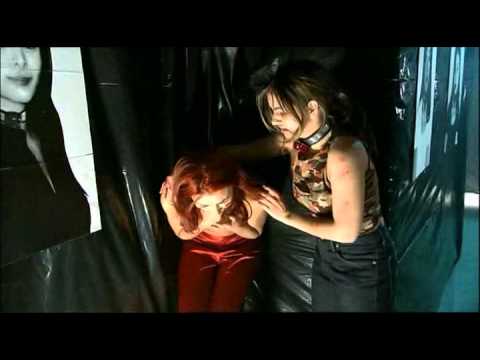
Paradoxically both the highest-rated episode during The Avengers' original television run, and the story the was notoriously banned in the USA and remained unscreened during it's American network run (though stories of TV executives gathering in hotel rooms for 'private viewings' of it have abounded for years), much of "A Touch of Brimstone"'s reputation hangs not only on its artfully debauched air of decadence but on That Costume worn by Diana Rigg when Mrs Peel is put on display by Cartney for his roistering chums as The Queen of Sin.  The outfit of corset, knee-high boots and leashed collar studded with the three inch spikes (oh, and a snake: tres Santanico Pandaemonium!) may not quite be gentleman's relish for the palate of today's internet-jaded public, but at a time when television censors went snippety-snip double quick at the word 'Hell' in dialogue or an exposed belly button, those American network chiefs gathered around their flickering screens in seedy hotel rooms must have been having palpitations.


Oh, and if you'll pardon my problematic Male Gaze, it still works for me - especially since the indomitable Mrs Peel remains unbowed and not cowed throughout the cracks and lashes of Cartney's whip (another controversial element, which was cut for both domestic and international release, and the scene remaining unseen in full until its pristine DVD restoration).


Also starring Colin Jeavons, Jeremy Young and Monty Python's Carol Cleveland "A Touch of Brimstone" is a fine example of a television series and its confident pomp and prime, wittily written, artfully directed and fronted by a trio of superlative performances from Macnee, Rigg and Wyngarde.


'Mrs Peel, we're needed.'  You certainly are.  Who's Ian Hendry again?